
The US Federal Reserve on Wednesday raised its benchmark interest rate by a quarter percentage point in its first hike since July 2023, while signaling the possibility of another increase later this year amid persistent inflation and high oil prices.
During the two-day Federal Open Market Committee meeting, the Fed decided to increase the rate to the 3.75–4.00 percent range in a 12-0 vote, despite US President Donald Trump's repeated calls for the central bank to lower borrowing costs to boost the economy.
The increase left the gap between the key interest rates of South Korea and the United States at up to 1 percentage point.
According to the FOMC members' new median economic projection, the federal funds rate is expected to rise to 4.1 percent at the end of this year, up from the June projection of 3.8 percent, indicating the possibility of another increase later this year.
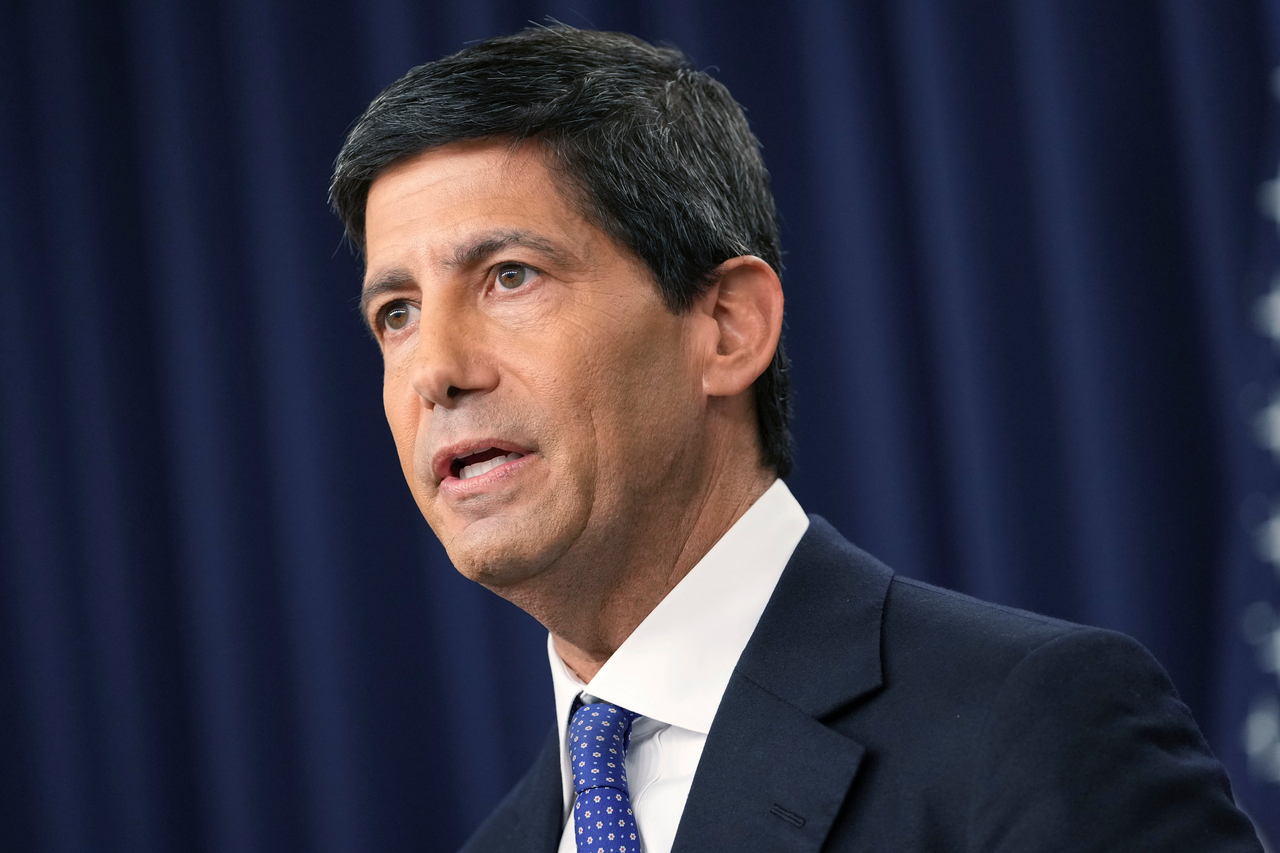
Fed Chair Kevin Warsh did not submit a "dot plot" projection as he had pledged not to.
In the run-up to the FOMC meeting, new data added to concerns over price pressures. On Friday, the Labor Department's Bureau of Labor Statistics reported that the "core" consumer price index, which excludes volatile food and energy costs, recorded a 0.3 percent monthly gain last month, 0.1 percentage point higher than forecast.
During a press conference, Warsh pointed out that inflation is "too high" and has remained "for too long," while reiterating the central bank's commitment to achieving price stability.
"The labor side of the Fed's congressional remit is in good shape. Yet for more than five years, inflation has been running above target," he said, referring to the Fed's inflation target of 2 percent.
"So our predominant focus is on the price stability side of our mandate. The plain fact is that inflation is too high and has been for too long," he added.
The Fed chair underscored that the unanimous vote on this week's rate decision shows the central bank's "resolve to achieve price stability on a timelier basis."
This week's hike marked a setback for Trump as the president has pressured the Fed to lower interest rates ahead of the November midterm elections.
In a recent social media post before the rate-setting meeting, Trump threatened to stop trading with countries with which the US has a trade deficit unless the Fed lowers interest rates.
Asked about Trump's threat and his discussions with the president, the Fed chair said, "I don't have anything for you."
Following the rate increase, Trump doubled down on his call for lower rates in a social media post.
"Interest Rates in the United States should be 1%, or less, because we are the Best Credit in the World -- BY FAR. Our Country is BOOMING with new Investment! " he wrote on Truth Social.
He also claimed that if the US stopped trading with every country running a trade surplus with the US, the US would make at least $1.5 trillion a year.
"The word 'Deficit' is nothing more than a fancy word for LOSS. We are 'carrying' almost every country in the World, and that cannot go on any longer," he said. "LOWER THE INTEREST RATES FOR THE UNITED STATES OF AMERICA, AND FAST!"
US gross domestic product is expected to grow by 2.3 percent this year, up from 2.2 percent projected in June, and by 2.4 percent next year, up from the previous forecast of 2.3 percent, according to the Fed median projection.
Personal Consumption Expenditures inflation is projected to reach 3.7 percent at the end of the year, an increase from the June projection of 3.6 percent, and 2.3 percent at the end of next year, the same as the previous forecast.
PCE is a measure of household consumer spending on goods and services in the US. (Yonhap)

![[Exclusive] Dongguk to launch college exclusively for international students in 2028](https://wimg.heraldcorp.com/news/cms/2026/10/19/news-p.v1.20261018.8b8b5d36af3a48228705dabb67c46f95_R.png?type=h&h=120)