
Experts call for overhaul of traditional forecasting models to account for new weather patterns
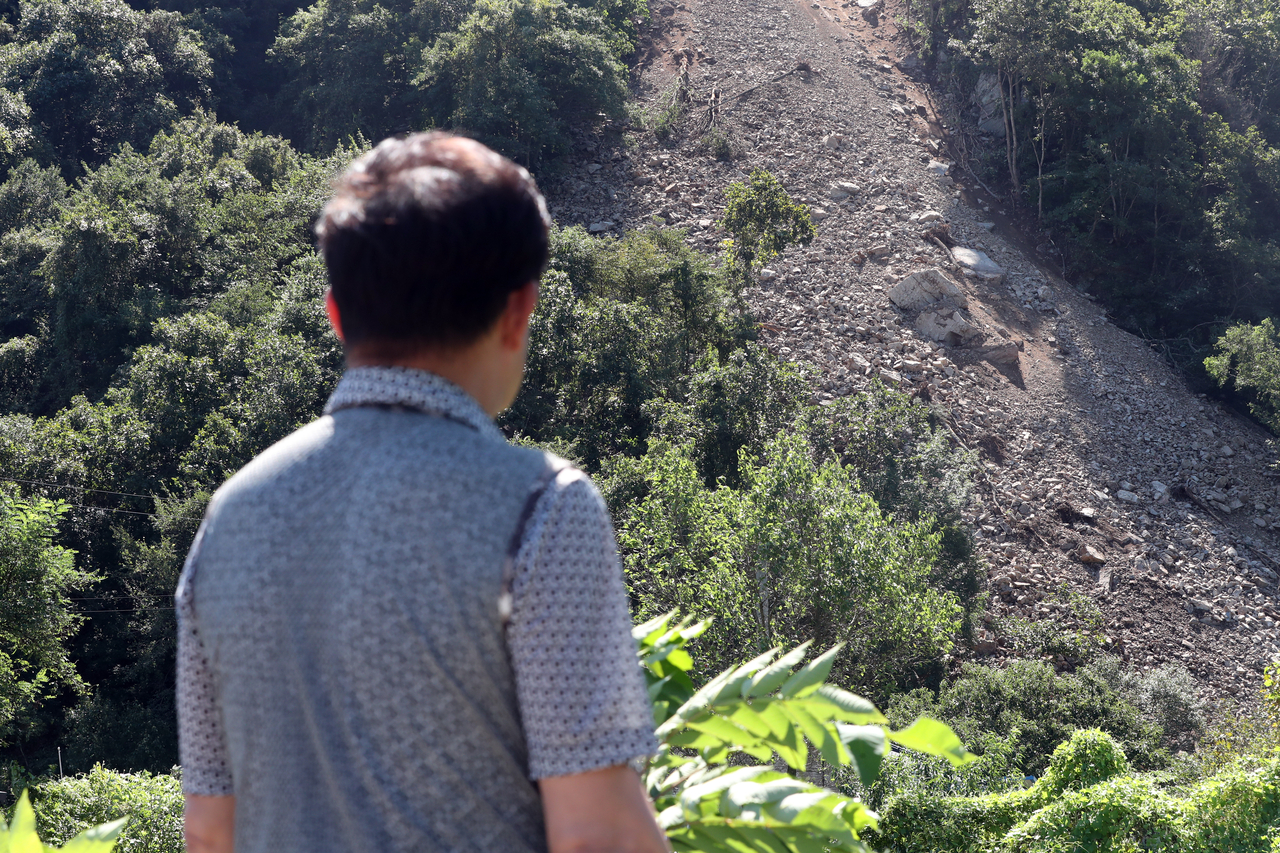
South Korea’s slopes face a growing threat from intense downpours and wildfires, but experts warn that landslide forecasts remain too rooted in the past.
With roads and homes built close to hillsides, slope failures can quickly turn heavy rain into a deadly disaster. Wildfires can leave slopes vulnerable for years, while changing rainfall patterns are bringing heavier rain over shorter periods.
Experts say forecasting models need to account for future climate conditions, and prevention efforts must address risks across slopes divided among different government agencies.
The consequences of the outdated system have been deadly. Landslides accounted for nearly half of all deaths and disappearances linked to heavy rain in Korea from 2016 to 2025.
Korea Forest Service data also show that the annual average number of landslides more than quadrupled between 2015-2019 and 2020-2024, reaching 2,637 in 2025.
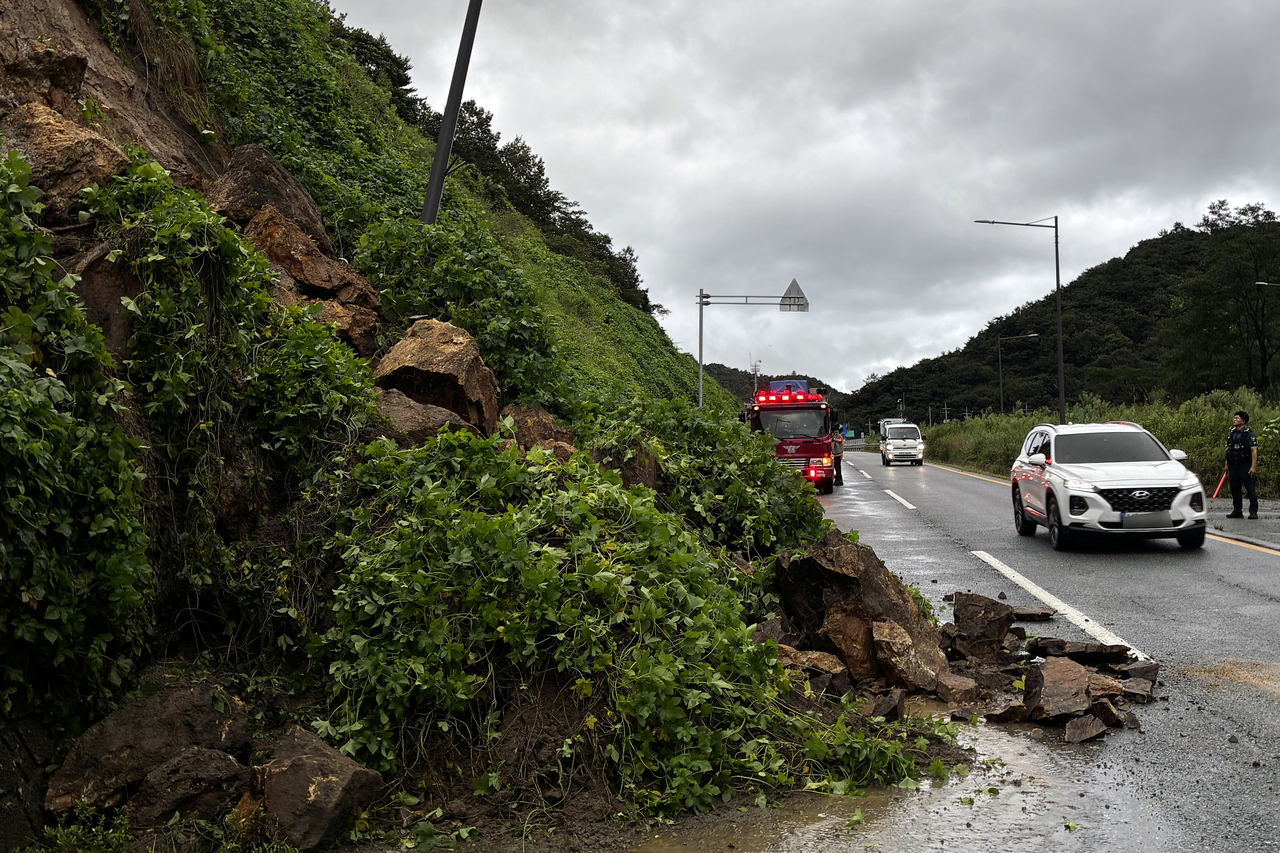
Mounting cases
Korea is prone to damage from landslides, as mountains cover about 70 percent of the country and development projects continue to cut into slopes for residential and industrial complexes.
In 2011, a landslide engulfed apartment buildings in southern Seoul, killing 16 people. In 2023, landslides and housing collapses killed 13 people in North Gyeongsang Province. In 2025, a landslide in Sancheong, South Gyeongsang Province, killed 14 people.
Lee Soo-gon, a former civil engineering professor at the University of Seoul, said many safety problems arise on slopes altered by human activity, including those where roads, paths, homes and solar panels have been built.
“Landslides are natural things that happen on slopes, but human activity clearly has an impact,” Lee said. "At the same time, we cannot simply stop using mountainous areas."
He said thorough geological surveys should be conducted before civil engineering work to prevent landslides, but that a lack of investment and experts within government agencies remains a problem in Korea.
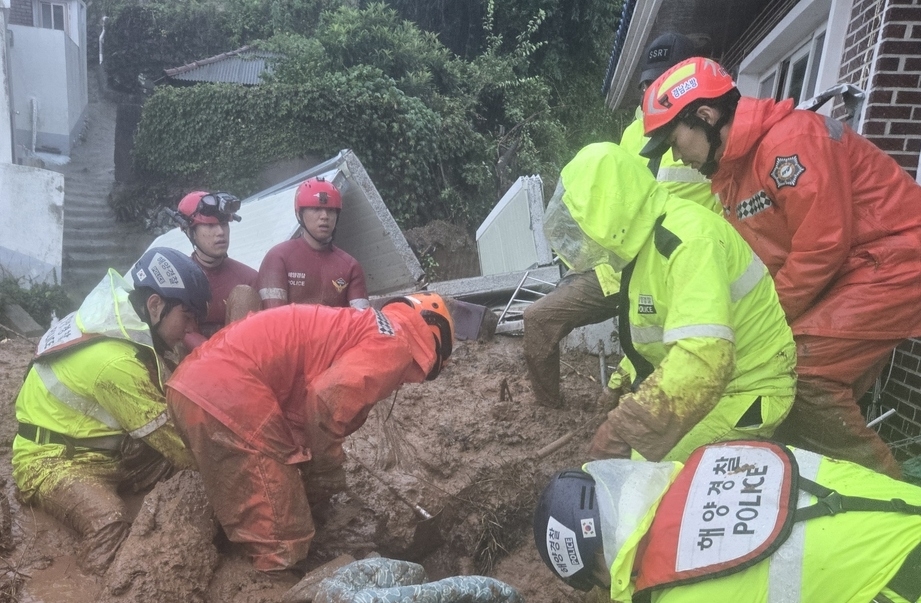
Risk grows with climate change
The increasing incidence of landslides coincides with changes in Korea’s rainfall patterns, with fewer rainy days but more intense precipitation concentrated over shorter periods.
Experts say the increasing risk of wildfires during prolonged droughts can compound landslide risks. A landslide in Sancheong, South Gyeongsang Province, in 2025 occurred in an area affected by a wildfire earlier that year.
“Landslide risk remains relatively high even six to 10 years after a wildfire,” said a researcher at the National Institute of Forest Science. “The presumed reason is reduced resistance to slope failure after trees die from wildfire damage.”
Drought itself has not been clearly established as a direct factor that increases landslide risk. But a sudden increase in soil moisture can make slopes more susceptible to failure, a Korea Meteorological Administration official said.
The frequency of extreme downpours has increased sharply in recent years. The number of instances of hourly rainfall exceeding 100 millimeters rose to 16 in 2024 and 15 in 2025, compared to an annual average of 1.1 during 2010-2023, according to the Korea Meteorological Administration.
At the same time, the annual number of rainy days has been declining by 0.68 days per decade, suggesting that rainfall is becoming more concentrated into fewer days.
“Contrasting extreme weather events are increasingly occurring in sequence, with a time lag between them,” the official said. “We suffer from an extreme lack of rain, only to face damage from an extreme amount of rain soon afterward. The extremes that we experience are becoming more pronounced.”
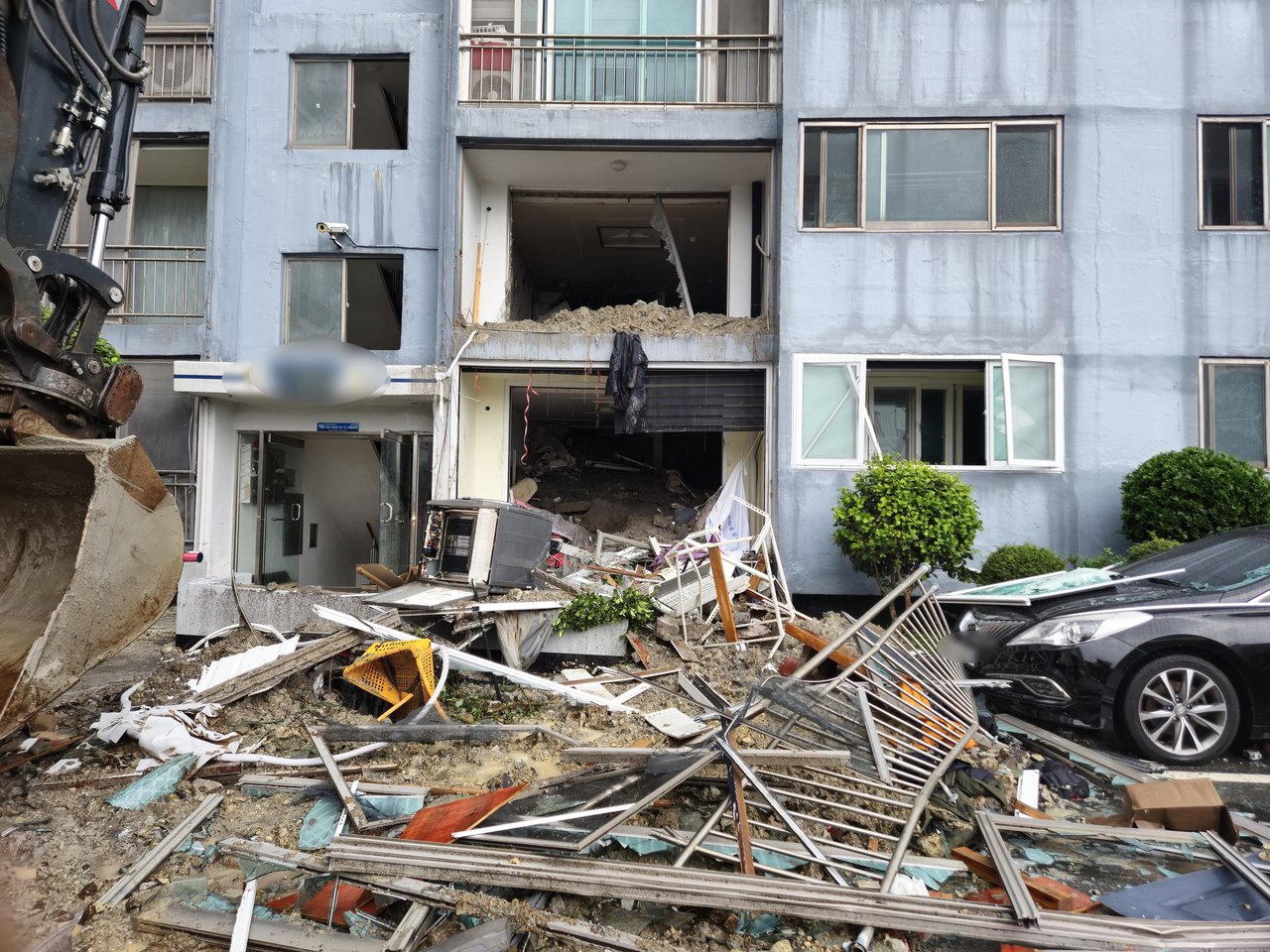
Forecasting landslides beyond history
As climate change alters weather patterns, experts say Korea’s landslide forecasting system needs to move beyond models based primarily on past incidents.
Kim Dong-yeop, a professor of forest resources at Daegu University, said the current forecasting model, which is largely based on past incidents, may become less effective as weather patterns change.
“The Korea Forest Service has been adjusting forecasting variables when factors such as large-scale wildfires at the national disaster level occur,” Kim said. “But the intensity and frequency of precipitation are changing significantly, so the forecasting system needs to reflect possible future scenarios.”
Lee also called for a more integrated approach to landslide prevention, saying risks can fall between the jurisdictions of different government agencies.
“Even on a single slope, different parts can fall under different agencies. Forested areas are handled by the Forest Service, while roads, tunnels and residential areas are managed under different authorities,” Lee said. “When each agency focuses only on its own jurisdiction, comprehensive management is difficult.”
He also called for more detailed geological surveys before major construction projects, saying geological conditions should be considered more carefully in landslide-prone areas.
“Many areas where landslides occur have experienced ground movement associated with faults,” Lee said. “Korea has old rock formations and faults scattered across the country, but these geological features are not always fully identified during large-scale construction projects.”
forestjs@heraldcorp.com



![[Room Tone] Monopoly’s less famous cousin](https://wimg.heraldcorp.com/news/cms/2026/09/15/news-p.v1.20260427.66c40f4b14054f6a8c036bfc20e046c9_R.jpg?type=h&h=120)