

As Kospi breaks records, more Koreans are pouring into stocks, driven by fear of missing out and fading faith in traditional paths to economic security

At lunch tables, office coffee breaks and weekend family gatherings, conversations increasingly revolve around which shares surged overnight, which semiconductor stock might be the next to double and who made how much money in a single day.
Social media feeds are flooded with screenshots of investors’ portfolios showing eye-popping gains. Bookstores have turned bestseller sections over to investing guides and stock market strategy books. Even teenagers are joining the frenzy.
The fever comes as South Korea’s stock market enters unprecedented territory. The benchmark Kospi index broke above the 8,000 mark for the first time during intraday trading Friday, only seven trading days after surpassing 7,000.
Since the launch of Korea’s stock market in 1956, it took more than 18 years for the Kospi to rise from 1,000 to 2,000 points, and another 13 years to reach 3,000. But the jump from 4,000 to 7,000 took just four months, turning the rally into one of the most closely watched market stories in Asia.
For many Koreans, the stock market is no longer a niche financial arena reserved for professional investors. It has become part of everyday life.
“Everyone, literally everyone, is talking about stocks these days,” said Shin, a 32-year-old bank employee. “During lunch with colleagues, we talk about stocks. After work, with friends, we talk about stocks. On weekends, I talk about stocks with my family.”
According to the Korea Financial Investment Association, the number of stock trading accounts surpassed 105 million as of May 6, up 7.08 million since the beginning of the year and 15.45 million from a year earlier. Investor deposits waiting on the sidelines for stock purchases reached a record 136.9 trillion won, or $91 billion.
At the same time, margin loans, or money borrowed from brokerages for stock investments, surged to nearly 36 trillion won, the highest level ever recorded.
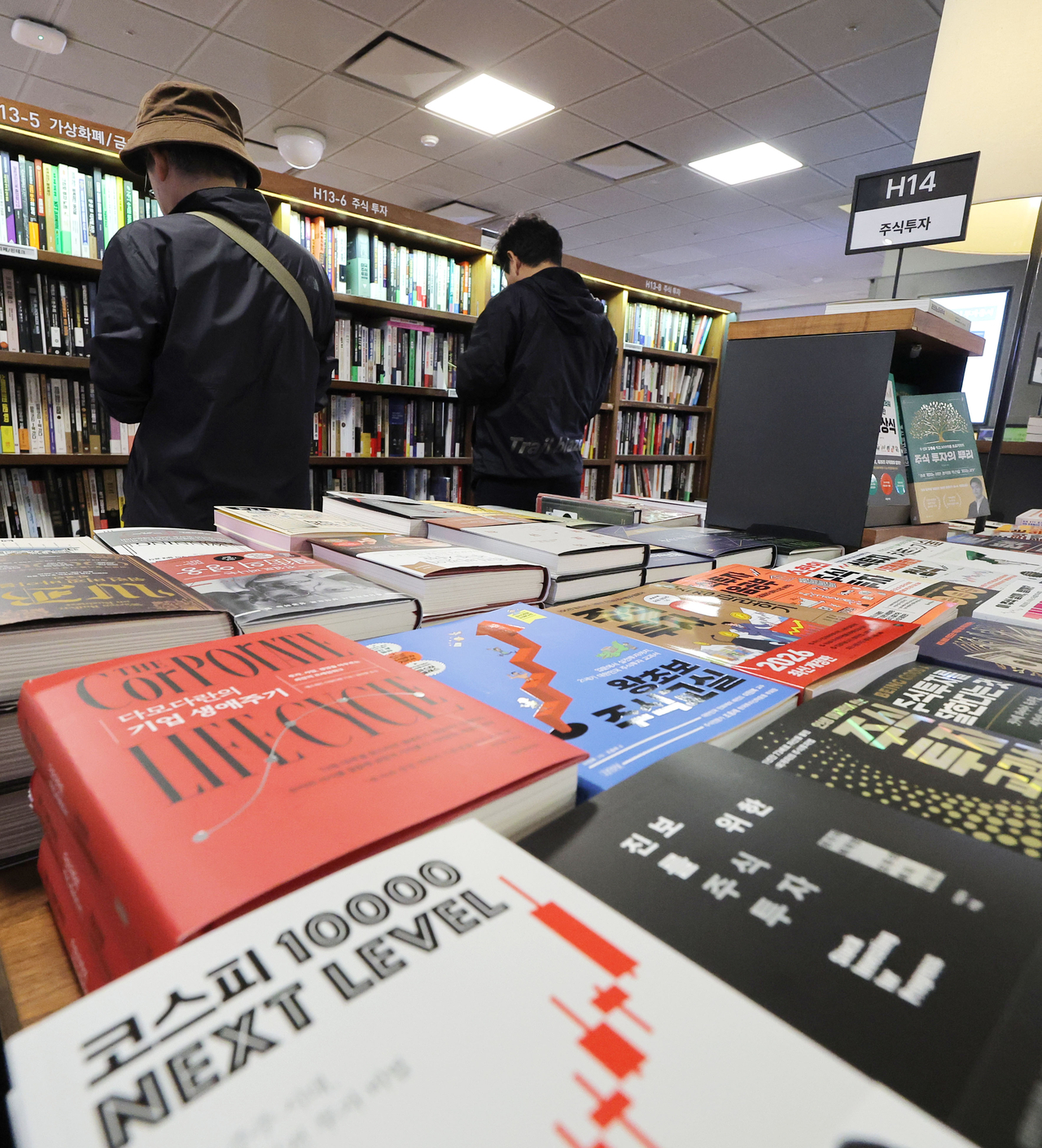
Behind the frenzy
The phenomenon cuts across generations.
Young job seekers, office workers, retirees and even students are pouring into the market, many driven by a growing sense that traditional paths to upward mobility are no longer enough.
For younger Koreans in particular, the stock market increasingly represents not just an opportunity, but what feels like one of the few remaining chances to move up economically.
Kim Tae-yoo, 18, has not even entered university yet, but he already spends evenings studying stock charts and watching investment videos online.
“Many of my friends share the idea that going to a good university and getting a decent job won’t make us rich, or even let us live an abundant life,” he told The Korea Herald. “So many of my friends and I are interested in stocks, where we can grow our wealth.”
For decades, South Korea’s social formula appeared relatively straightforward: study hard, enter a stable company, save money, buy a home and gradually build wealth. But that formula has become increasingly difficult to follow.
Even with full-time jobs, soaring housing prices and widening asset gaps have left many feeling permanently locked out of financial security. Salaries rise slowly, while stocks, real estate and cryptocurrencies appear capable of generating life-changing wealth within months.
This growing frustration helps explain why investment has become deeply embedded in youth culture.
“People are not entering the market purely out of greed,” said Yoon Yin-jin, a sociology professor at Korea University. “Many genuinely feel labor income alone can no longer close the gap.”
Mobile trading apps have also dramatically lowered entry barriers, allowing young people to buy fractional shares, ETFs and overseas stocks with just a smartphone. Economic discussions that once belonged to experts now dominate YouTube channels, online communities and daily conversations.
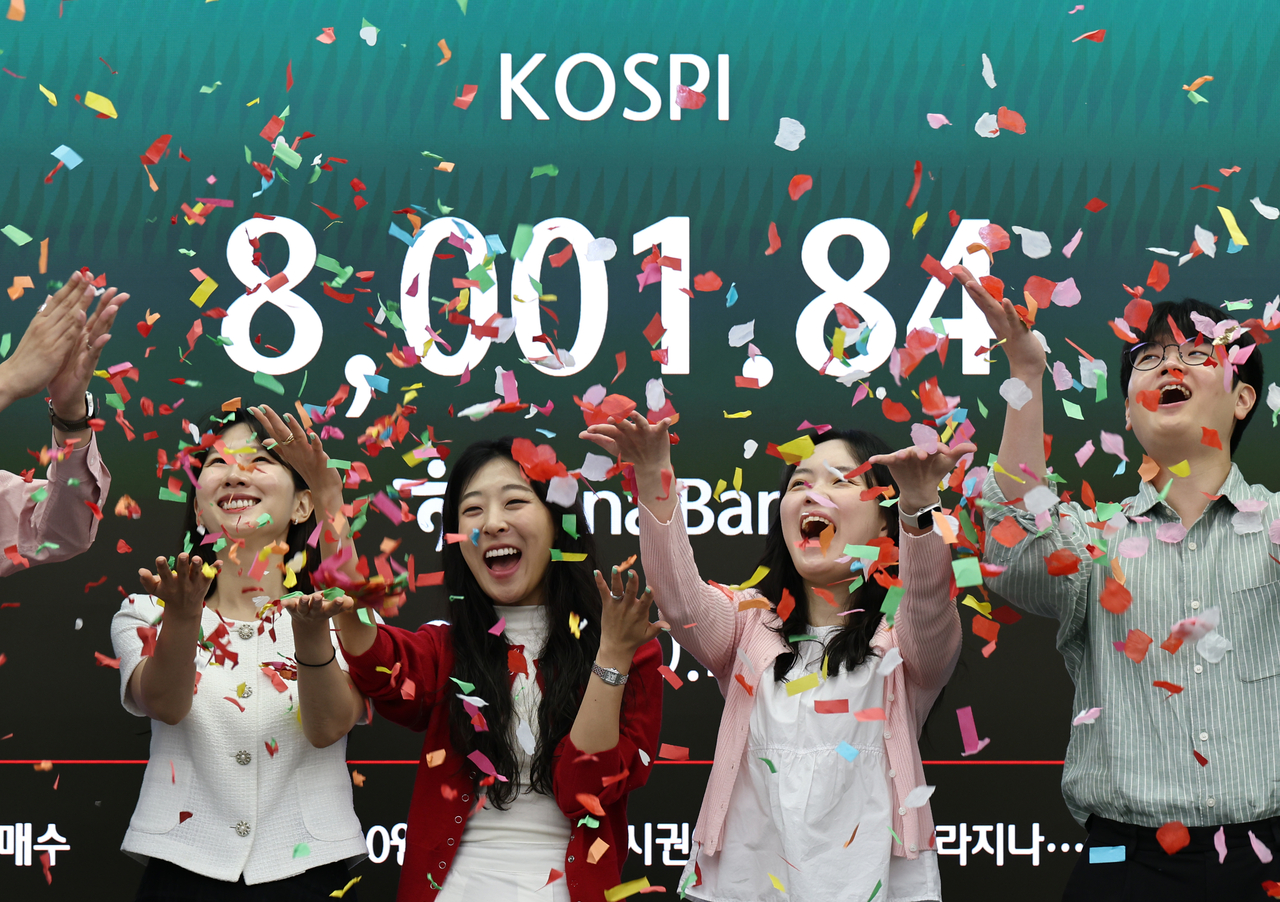
Fear of missing out
But alongside the excitement, concerns are growing that the country’s investment boom is being fueled less by long-term financial planning than by a fear of missing out.
Experts warn that many investors are entering the market not because they believe in the long-term value of the companies they buy shares in, but because they fear being left behind while others profit.
“When people repeatedly hear stories about others doubling or tripling their money, rational judgment becomes weaker,” said Son Yang-hoon, emeritus professor of economics at Incheon National University. “The danger is that investing starts becoming less about evaluating companies and more about chasing quick fortunes.”
That anxiety is especially visible in the explosive rise of debt-financed investing.
Data submitted by major brokerages to lawmaker Kang Min-kook’s office showed that margin loan balances among investors in their 20s jumped from 188.8 billion won in April 2025 to 423.9 billion won in April 2026, a 124.5 percent increase in just one year.
The increase was steeper than that of any other age group except investors over 70.
Financial authorities worry that many younger investors lack the stable incomes and savings needed to withstand a major market correction. If stock prices suddenly fall, margin calls and forced liquidations could trigger devastating losses.
A Financial Supervisory Service analysis of roughly 4.6 million retail accounts found that investors using margin loans posted average losses of 19 percent during a recent trading period, compared with losses of 8.2 percent among investors who did not borrow money.
“Financially vulnerable young people and students are doubling their debt to follow the market rally,” Kang warned. “Reckless debt-financed investing among young people could become not just an individual problem, but a major social risk.”
The anxiety extends beyond the stock market itself.
Experts say the investment frenzy reflects a broader structural anxiety spreading throughout Korean society, as faith weakens in the idea that a job can provide stability or upward mobility by itself.
As housing prices continue to outpace wage growth, more young Koreans are abandoning traditional savings strategies.
Housing subscription savings accounts, used to apply for new apartments and long considered essential for future home ownership, are rapidly losing users as many redirect money into stocks. This year alone, more than 130,000 South Koreans reportedly canceled their housing subscription savings accounts.
“Low interest rates and slim odds of winning an apartment have made long-term saving feel pointless compared to rapidly rising markets,” said Kang, a 34-year-old office worker who recently canceled her housing subscription savings account.
“Why lock money away for years when stocks are moving 10 or 20 percent in months?” she added.
Some experts say the trend reveals a dangerous psychological shift.
“In healthy capitalism, stock investing is a way to participate in corporate growth and share its value,” said Son. “But increasingly, the market is being driven by the idea that one lucky investment can completely change your life.”
That mentality, Son said, becomes especially dangerous during euphoric bull markets.
Already, money is rapidly flowing into high-risk leveraged products tied to major Korean stocks such as Samsung Electronics and SK hynix. Applications for mandatory education programs tied to leveraged single-stock ETFs have surged as retail investors chase amplified returns.
Financial regulators have started stepping in. The Financial Supervisory Service recently summoned major brokerages and urged them to strengthen risk controls on leveraged investments and margin lending. Several securities firms have already imposed temporary restrictions on new margin loans for overheated stocks.
“For now, South Korea’s soaring stock market has created an atmosphere of excitement, hope and possibility,” Son said. “But beneath the celebration lies a deeper unease: A growing sense among many Koreans that stable work and steady saving are no longer enough to build a future.”
jychoi@heraldcorp.com